

Sit between payor and provider, and keep the books straight
The toughest claims problems live in the gap between the provider and the health plan. Claims-Flow tracks accounts payable and accounts receivable separately, so refunds, reversals, and resubmissions are easier to manage.
Talk to our team →Unique claim challenges our clients face
- Inefficiencies from the constraints of traditional claims adjudication platforms
- Managing data exchange with the health plans (members, accumulators, reporting)
- Processing and tracking time-sensitive appeals outside the claims system
- Integrating with UM and other systems that impact claims payments
What traditional platforms miss
Traditional platforms are designed to adjudicate and produce a single response, one endpoint.
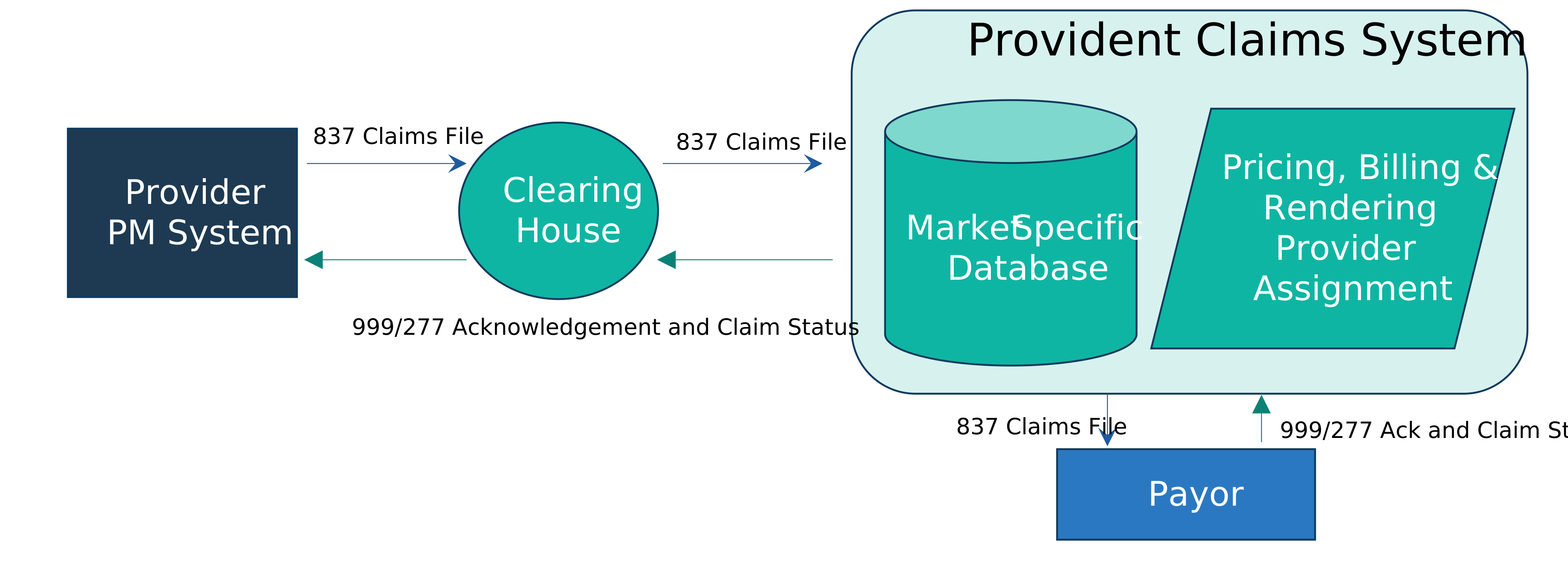
Store provider claims directly from their practice management system.
Delivering and tracking claims upstream to payors is difficult.
Immediately submit those same claims to the payor with minimal scrubbing, avoiding timely-filing delays.
Refunds, payment reversals, and resubmissions are always a challenge.
Maintain provider balances (AP) and payor balances (AR) separately, so the two never get tangled.
Pricing methodology is inflexible and configuration is heavy to maintain.
Track the payor claim and provider claim independently; payments and adjustments react together to payor input.
Two ledgers, one claim, always in sync
Many clients price claims against custom contracts with both the payor and the provider: risk-based per-member-per-month, percentage arrangements, and others. Claims-Flow keeps the provider side (AP) and payor side (AR) as separate balances that still react together when the payor responds.
Close the gap between payor and provider
See how separate AP/AR tracking works on a real claim.